Burundi
Republic of Burundi
March 15
Africa


click to enlarge

GEOGRAPHY

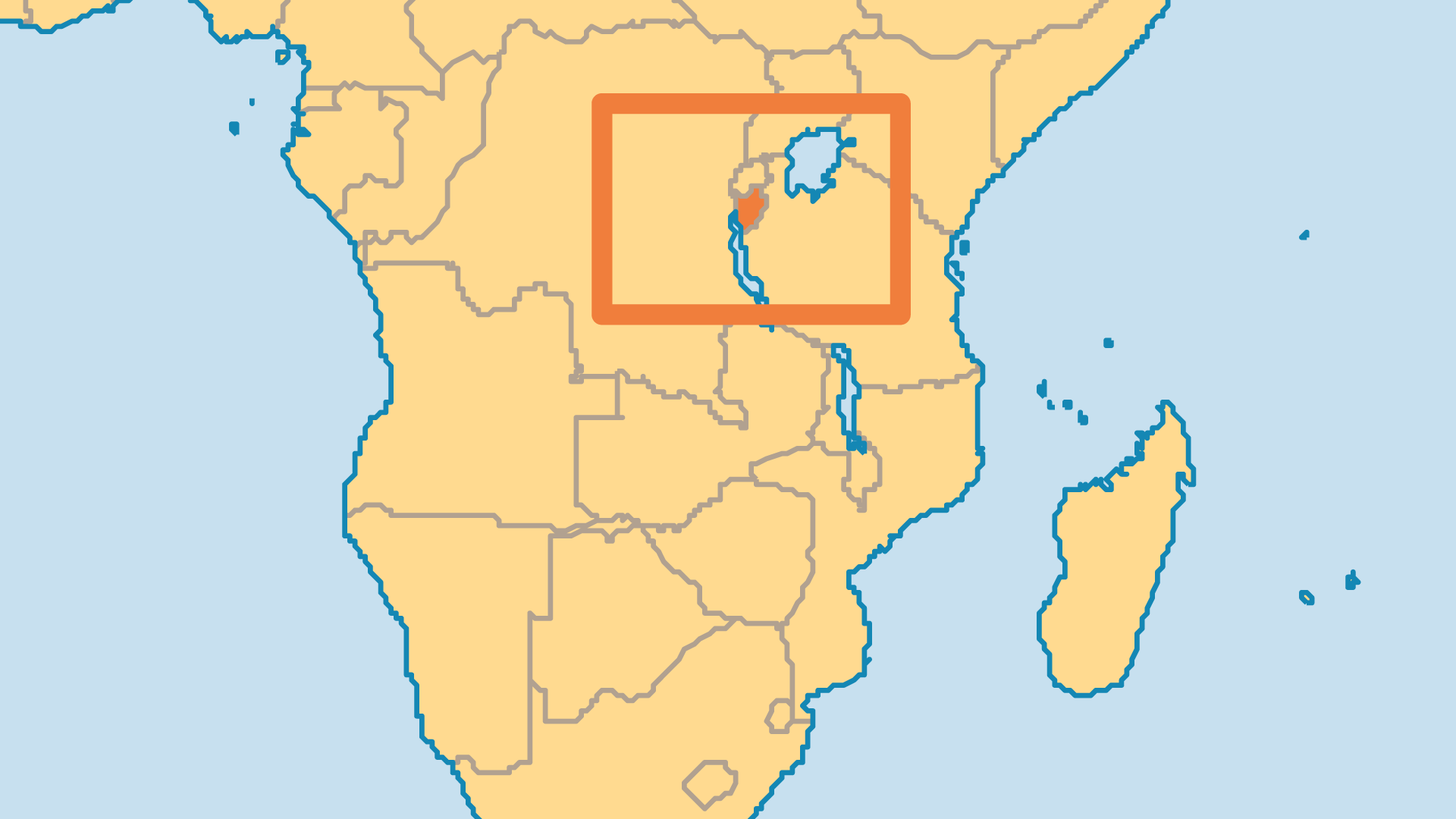
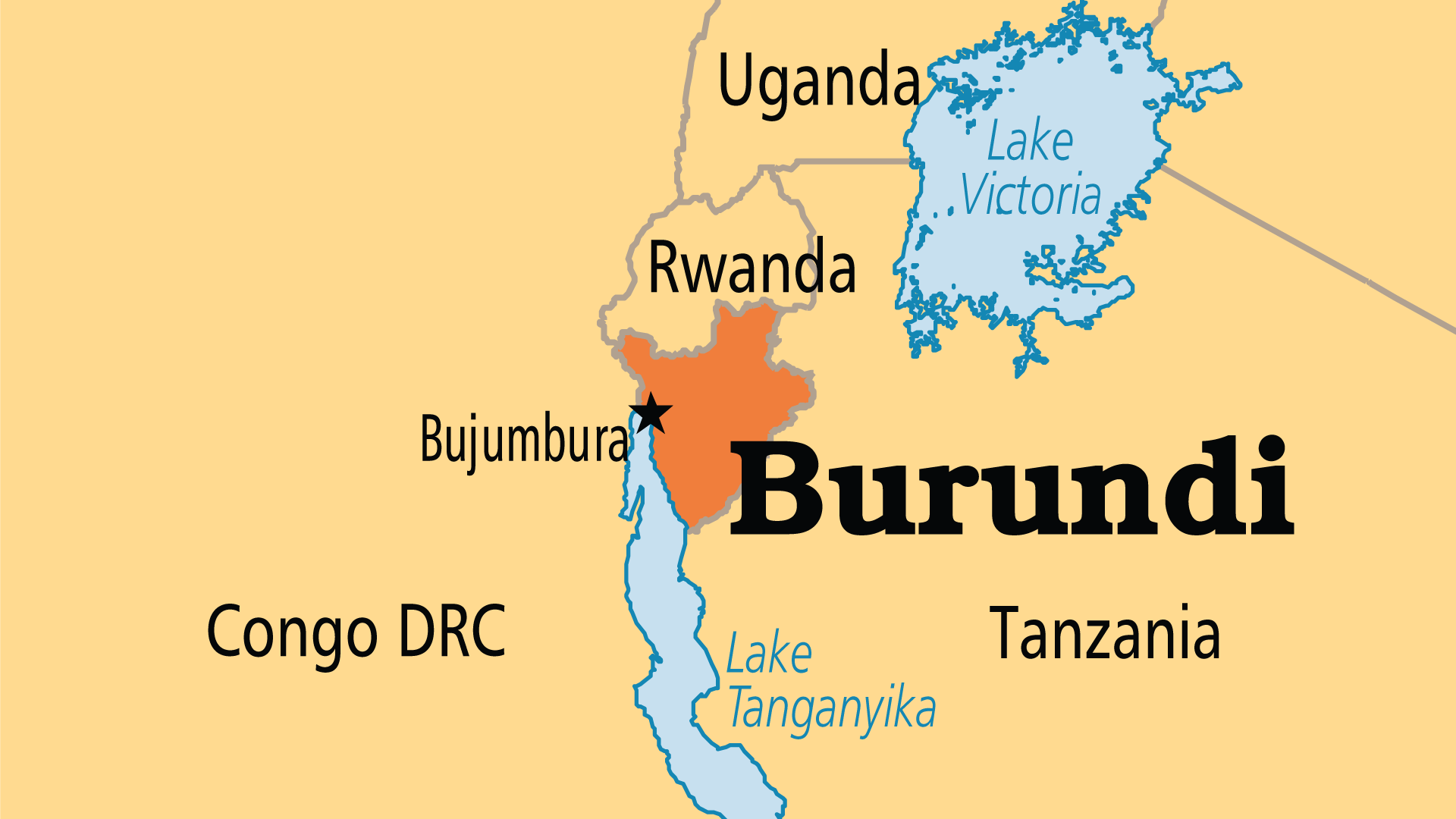
Area: 27,834 sq.km. A mountainous, fertile country on the north shore of Lake Tanganyika, south of its 'twin' Rwanda.

Population Ann.Gr. Density
2000 6,695,001 +1.69% 241 per sq. km.
2010 8,496,970 +2.23% 305 per sq. km.
2025 11,568,648 +1.87% 416 per sq. km.

Large movements of refugees in and out of the country in the 1990s.

Capital Bujumbura 600,000. Urbanites 12%.

PEOPLES

Rundi-speaking 97%. Considerable inter-ethnic mixing.

Tutsi 14%. The politically dominant minority.

Hutu 82%. A further 300,000+ live as refugees in Tanzania and Congo-DRC.

Twa Pygmies 1%. Despised by other groups.

Other African 2.8%. Rwandan 90,000; Congolese 40,000.

Other 0.2%. South Asian 2,500; European 2,400; Arab 1,600.

Literacy 19%. Official languages kiRundi, French. All speak kiRundi. All languages 4. Languages with Scriptures 2Bi.

ECONOMY

One of the world's poorest states in 1990. Mineral resources little exploited. Soil erosion is a serious problem. Ethnic strife and wars have displaced 1.7 million people, denuded much of the country, and led to international sanctions against the existing regime in 1996, reducing much of the population to destitution and dependence on aid. HDI 0.324; 170th/174. Public debt 44% of GNP. Income/person $250 (0.8% of USA).

POLITICS

For 400 years, Tutsi lordship over the Hutu majority has dominated the political life of Burundi. After the country's independence from Belgium in 1962, the Tutsi constitutional monarchy was replaced by a republican military regime in 1966. A succession of Tutsi-dominated governments and military regimes since then have managed to retain Tutsi domination of the army, commerce and education. The human rights record of the government has been appalling – Hutu attempts to gain power have been followed by pogroms in 1972, 1988, and 1993-95. There have been periods of some power sharing between the two ethnic groups since 1988. The Great Lakes War feeds weapons and soldiers into an ongoing civil war in Burundi that contrives to thwart international efforts to mediate a peaceful solution.

RELIGION

Freedom of religion.

Religions Population % Adherents Ann.Gr.
Christian 90.06 6,029,518 +1.4%
Traditional ethnic 6.72 449,904 +1.2%
Muslim 3.00 200,850 +15.3%
Baha'i 0.08 5,356 +1.7%
Hindu 0.08 5,356 +4.4%
non-Religious/other 0.06 4,017 +1.7%

Christians Denom. Affil.% ,000 Ann.Gr.
Protestant 18 12.61 844 +2.2%
Independent 12 1.88 126 +23.8%
Anglican 1 7.47 500 +3.6%
Catholic 1 57.17 3,828 +1.3%
Orthodox 1 0.02 1 -2.6%
Marginal 1 0.07 4 +9.7%
Unaffiliated   10.84 725 n.a.

Churches MegaBloc Cong. Members Affiliates
Catholic C 1,562 2,187,166 3,828,000
Church of Pentecost P 2,773 208,000 520,000
Protestant Episcopal A 5,669 170,000 500,000
Seventh-day Adventist P 210 62,000 100,000
Methodist Ch Union P 160 29,000 60,000
Eglise Vivante I 50 35,000 70,000
Evang Episcopal P 168 21,000 42,000
Union of Baptist P 167 20,000 35,000
Friends (Quakers) P 84 8,000 16,000
Brotherhood of Christ I 20 2,000 4,000
Other denoms [26]   820 69,676 135,000
Total Christians [35]   11,633 2,810,000 5,305,000
Trans-bloc Groupings pop. % ,000 Ann.Gr.
Evangelical 21.0 1,406 +4.4%
Charismatic 13.4 895 +4.8%
  Pentecostal 9.5 639 +5.6%

Missionaries from Burundi
P,I,A 36 in 3 agencies all in Burundi.

Missionaries to Burundi
P,I,A 49 in 13 agencies from 9 countries: USA 21, Sweden 15.


click for legend

Challenges for Prayer

12 p} 1Pray for reconciliationbetween Tutsi and Hutu and for peace to come to the land. Centuries of oppression and cycles of killings, reprisals and counter-killings have left a legacy of pain and hatred that bode ill for any resolution. All national and international attempts at mediation have failed to bring Hutu rebel factions to the negotiating table.

2 Revival in the 1950sbrought blessing and great church growth, but a generation later the land has been physically, morally and spiritually devastated. The Church is the only institution in the land able to give the point where reconciliation could begin. Only a miracle from God in many hearts will achieve this. Pray for all the satanic enmity, bondage and guilt to be cleansed through the blood of Jesus.

3 Both Protestant and Catholic leaders have been prominent in opposing ethnic hatred and 'cleansing', but many Hutu and Tutsi church leaders have been killed or driven into exile. Many churches have been destroyed in the fighting. Pray for unity, wisdom, the love of Christ and courage for all who seek the good of the country and growth of the Church. Pray also that the churches many be able to rebuild the schooling system which has largely broken down – the government has asked for this, but resources are lacking.

4 Leadership for the churches is in short supply; persecution and closure of Bible schools cut off the supply of newly trained leaders. Pray for the full re-establishment of the Mweya Theological Institute (Friends, Free Methodists and WGM), the Pentecostal Bible School and for the effective launching of the Matana Theological College (Anglican-MAM). Pray for the restoration of full teaching programmes and adequate, godly staff in each institution and for the effective re-commencing of TEE courses.

5 In the midst of suffering, evangelical Christians have continued to grow. The most significant are a number of Pentecostal churches, Anglicans, Free Methodists and Eglise Vivante. Pray for the witness of believers when all around has collapsed and so many people are embittered with the ongoing genocide being perpetrated by both sides.

6 Areas of greater spiritual need:

a) The Twa are relatively less well evangelized. About 7% are Christian.

b) Refugee camps in Tanzania and Congo where spiritual life is tough and where it is difficult to maintain a clear witness. Pray for the churches in them.

c) Displaced refugees within Burundi.

d) The Muslim community which, though small, is growing because of the bad witness of the many 'Christians' involved in the killings. Over 700 Muslims perished in the 1995 killings.

7 Young people and children – special items for prayer:

a) Children are suffering, many are orphans, and few have the chance of schooling or employment. Very little ministry, specifically to children, remains.

b) SU has had a good impact in the past – pray that this ministry may be resumed.

c) A small GBU(IFES) group continues in the one University, but student numbers have dropped drastically. The Christians are determined not to be divided racially.

8 Missionary involvement is small. A former regime expelled nearly all missionaries between 1970 and 1985 and few returned thereafter because of ongoing instability. Many will be needed to work with national leaders to help in the massive reconstruction of church and national life, restoring literacy programmes and reviving theological education. Pray for the calling of the right missionary personnel and for safety, effectiveness, godly modelling and good relationships with national believers.

9 Christian media – specific prayer targets:

a) Literacy programmes – the vast majority of the population is illiterate, including many believers.

b) Bibles – there is such a dearth that some reckon 4 million are needed. The Bible Society has distributed many Bible portions that challenge readers concerning reconciliation.

c) Radio. TWR and SU have established a communications centre in Bujumbara, where locally-produced programmes are prepared. In 2000 a Christian station, Radio Outreach-Ivyizigiro (Hope) started broadcasting from Bujumbura to Burundi and neighbouring countries. Pray for life to be imparted through these broadcasts.

d) The JESUS film has been viewed by most Burundians. Pray for lasting impact.

Internet Links

| Top | Home | Pray Today | Prayer Resources | Updates | OW Team | Contact Us | Policy | Tech Support |
.